
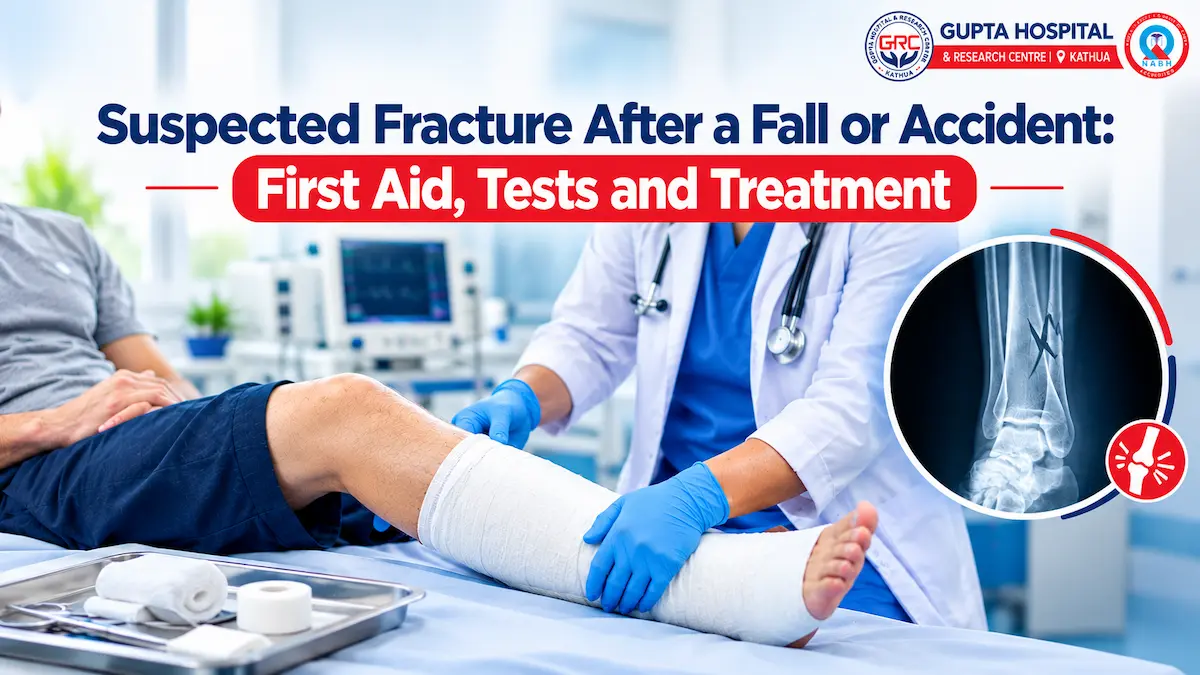
A fracture can happen even if there is no obvious deformity, such as after a fall or accident. Common fracture symptoms include: Severe pain Swelling Bruising Tenderness Inability to use the injured area Numbness A limb that looks bent or out of place. Fracture first aid and treatment is to immobilise the injured part, avoid unnecessary movement, cover any open wound, and seek medical assessment. X-ray and other imaging may be used to confirm the injury and guide treatment.
You have fallen or had an accident and now wonder if the injury is just a sprain or a broken bone?
After a fall, road accident or sports injury, pain and swelling can make it difficult to know what has actually happened. You may be tempted to move the injured area to check, but doing so can make the injury worse if a bone is fractured. Some fractures are obvious, while others may need an X-ray or further imaging to confirm.
According to medical guidance from Mayo Clinic and MedlinePlus, suspected fractures need medical assessment, especially when there is severe pain, deformity, heavy bleeding, numbness or an open wound. Dr. Mohinder Singh Chib, MBBS, MS Orthopedics, Orthopaedics at Gupta Hospital & Research Centre, provides specialist care for bone, joint and trauma-related conditions.
If you are dealing with an injury right now, this guide will help you understand fracture first aid and treatment, common fracture symptoms, when an injury is an emergency, which tests may be needed and how fractures are treated.
What Should You Do Immediately If You Suspect a Fracture?
The first priority is to prevent further injury. Stop using the injured arm, leg or joint and keep it as still as possible. Do not try to straighten it or push the bone back into place.
If bleeding, cover the wound with a clean cloth or dressing and apply gentle pressure around the wound. If the injury is serious, do not move the person unless there is immediate danger, especially if a head, neck, back, hip or pelvic injury is suspected.
Seek medical attention immediately. Sometimes the injury may not look serious but a fracture may not always be obvious externally.
What Are the Common Symptoms of a Fracture?
The fracture symptoms can vary depending on the bone and type of injury. Common signs include:
- Severe or increasing pain
- Swelling and bruising
- Tenderness around the injured area
- Difficulty moving the limb
- Difficulty putting weight on the injured leg
- A limb or joint that looks bent, twisted or out of position
- Numbness or tingling
- An open wound with bone visible in serious cases
A small crack may not cause obvious deformity, so being able to move the limb does not always rule out a fracture. Medical assessment and imaging may be needed to confirm the injury.
When Is a Suspected Fracture a Medical Emergency?
It is not the case that all fractures are immediately dangerous to life, but certain injuries do require emergency treatment since they could result in severe bleeding or damage to a nerve or blood vessel or in injuries to other parts of the body.
Signs That Require Immediate Emergency Care
- Seek emergency help if there is:
- Heavy bleeding
- Bone sticking through the skin
- A severely deformed limb
- Loss of feeling or movement below the injury
- Fingers or toes becoming pale, blue or unusually cold
- Severe pain after a major accident
- Difficulty breathing, fainting or loss of consciousness
Possible Head, Neck, Spine, Hip or Pelvic Injury
A fall or accident can cause more than a broken arm or leg. If you suspect an injury to the head, neck or spine, do not move the person unless there is an immediate safety risk.
A suspected hip, pelvic or upper-leg fracture can also be serious, particularly after a major fall or accident. Emergency assessment is important rather than trying to make the person walk.
Signs of Blood Vessel or Nerve Damage
Numbness, tingling, weakness, loss of movement, or fingers and toes becoming pale, blue or cold may indicate a problem with blood flow or nerves.
These signs should not be ignored. The injured limb needs urgent medical assessment to check circulation and nerve function.
How Should You Provide First Aid for a Suspected Fracture?
Until medical help is available:
- Keep the injured area still.
- Do not try to straighten a bent limb.
- Do not push a visible bone back under the skin.
- Cover an open wound with a clean dressing.
- Apply a wrapped ice pack to help reduce swelling and pain.
- Avoid putting weight on an injured leg or foot.
- If the arm is injured, support it with a sling if this can be done without causing more pain.
- Keep the person calm and watch for signs of shock.
Ice should always be wrapped in cloth rather than placed directly on the skin. If professional medical help is arriving quickly, avoid unnecessary movement or complicated splinting.
What Should You Not Do After a Suspected Fracture?
Some common actions can make an injury worse. Do not:
- Try to straighten the bone yourself.
- Push a bone back into the wound.
- Ask the injured person to walk just to “test” the leg.
- Keep moving the injured joint to check its range of motion.
- Massage the injured area.
- Ignore numbness, colour changes or increasing pain.
- Move someone with a possible spine injury unless absolutely necessary.
The safest approach is to keep the injury protected and get medical assessment.
What Happens at the Hospital After a Suspected Fracture?
At the hospital the doctor begins by asking the patient how the accident occurred and then examines the injured area; they look for any swelling, bruising, tenderness, deformity, open wounds and less movement.
The medical team can also examine circulation, sensation and movement in the affected limb since these checks will help to identify any possible nerve or blood vessel problems.
Imaging is employed in cases where a fracture is suspected; X-rays are usually used, but a CT scan or MRI may be recommended if more detailed information is required.
Which Tests Are Used to Diagnose a Fracture?
If your doctor suspects a fracture, the right test helps confirm whether the bone is broken and shows how serious the injury is. The test depends on the type and location of the injury, with X-ray usually being the first step.
Fracture X-Ray
An X-ray is usually the first imaging test used to look for a broken bone. It can show the location and pattern of many fractures and help the doctor decide on treatment.
However, some small or early fractures may not be clearly visible on an initial X-ray. Further imaging may be needed if symptoms and examination still suggest a fracture.
CT Scan for Complex Fractures
A CT scan provides more detailed images of the bone from different angles. It can be useful when the fracture is complex or when the doctor needs a clearer view of the bone and surrounding structures.
MRI for Hidden Fractures and Soft-Tissue Injuries
MRI gives detailed images of bones and soft tissues. It may be used when an X-ray does not clearly show the problem but a fracture is still suspected, or when doctors also need to assess soft-tissue injuries.
How Are Fractures Treated?
Treatment depends on the location, type and severity of the fracture.
A simple fracture may be treated with a splint or cast to keep the bone stable while it heals. If the bone has moved out of position, a doctor may need to perform a reduction to bring the bone fragments back into better alignment.
Some complex or displaced fractures may require surgery. Plates, screws, wires or other devices may be used to hold the bone in the correct position while it heals. Open fractures may need urgent treatment because of the risk of infection.
What Happens During Recovery From a Fracture?
Recovery depends on the bone involved, fracture type, treatment, age and overall health. Some fractures heal over several weeks, while more complex injuries can take longer.
Follow the doctor’s advice about weight-bearing, movement, cast or splint care and follow-up appointments. Rehabilitation or physiotherapy may be recommended to restore movement, strength and function after the bone has started healing.
Do not return to sports, heavy lifting or other demanding activities until your doctor says it is safe.
How Are Fractures Managed in Children and Older Adults?
Fractures can need special attention in children and older adults.
Children’s bones are still growing, so some fractures can involve growth plates. These injuries need proper assessment because growth can be affected in some cases.
Older adults may have weaker bones because of conditions such as osteoporosis. A relatively simple fall can sometimes cause a significant fracture, particularly around the hip. Prompt medical assessment is important after an injury, even when the fall does not appear severe.
Conclusion
A fall or accident can leave you unsure whether you are dealing with a sprain, dislocation or fracture. The safest approach is not to guess based only on pain or swelling.
Remember:
- Keep the injured area still.
- Do not try to straighten or reposition the bone.
- Cover open wounds with a clean dressing.
- Use wrapped ice to help with swelling.
- Get medical assessment when a fracture is suspected.
- Seek emergency care for heavy bleeding, severe deformity, numbness, colour changes, an exposed bone or suspected head, neck, spine, hip or pelvic injury.
For accident injury treatment, timely assessment can help identify the injury correctly and guide the right treatment. Gupta Hospital & Research Centre in Kathua has an Orthopaedics department providing diagnosis, treatment, surgical support and rehabilitation guidance for fractures, trauma and other bone and joint conditions. The hospital also provides 24×7 emergency, ambulance, ICU and diagnostic support.
FAQs
How Can You Tell the Difference Between a Fracture and a Sprain?
A fracture involves a break in the bone, while a sprain involves an injury to a ligament. Both can cause pain, swelling and difficulty moving. It may be difficult to tell them apart without a medical examination and, when needed, an X-ray or other imaging.]
Can You Move a Limb If the Bone Is Fractured?
Sometimes you may still be able to move a fractured limb. Movement does not rule out a fracture. Do not keep testing or moving the injured area; have it medically assessed.
Should Ice Be Applied to a Suspected Fracture?
Yes, a wrapped ice pack can help reduce pain and swelling. Do not place ice directly on the skin.
Is an X-Ray Always Enough to Detect a Fracture?
No. Many fractures can be seen on X-rays, but some small or hidden fractures may need CT or MRI when symptoms continue or the doctor suspects an injury that is not clearly visible.
Does Every Fracture Require a Plaster Cast?
No. Treatment depends on the type and location of the fracture. Some fractures need a splint, while others may require a cast, reduction or surgery.
When Does a Broken Bone Require Surgery?
Surgery may be needed when a fracture is severely displaced, unstable, open, involves certain joints, or cannot be kept in a suitable position with non-surgical treatment. The decision depends on the individual injury.
How Long Does a Fracture Take to Heal?
Healing time varies by the bone, type of fracture, age and overall health. Some fractures heal in several weeks, while more complicated injuries can take longer. Your doctor can give you a more specific estimate after examining the fracture.
What Should You Do If a Bone Is Visible Through the Skin?
Treat this as an emergency. Do not push the bone back into the skin or try to straighten it. Cover the wound with a clean dressing, keep the injured area as still as possible and seek emergency medical care immediately.