
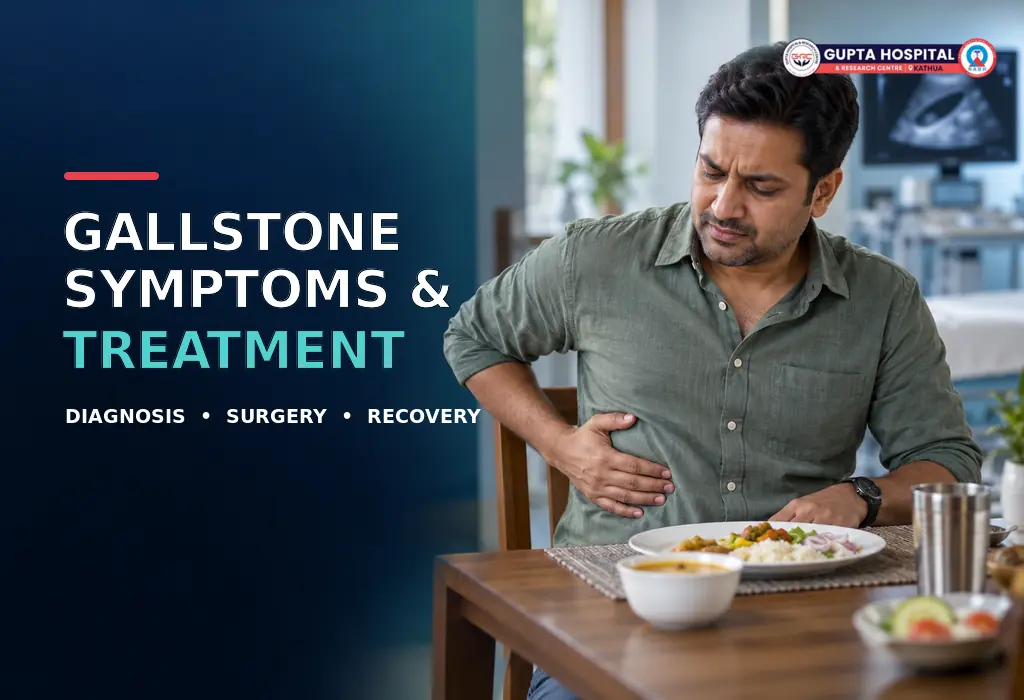
Suppose you have just had your lunch. After about twenty minutes, you suddenly experience a sharp pain under your right ribs that feels like someone is pinching you from within. This is when many people get their first symptoms of gallstones. This guide in simple language describes real gallstone symptoms and treatment options, the ways how gallstones are diagnosed, when you might require gallbladder surgery, and the various treatment options available.
What Are Gallstones and Where Do They Form?
The gallbladder is a small pouch, the size of a pear, located just beneath the liver. Its function is to store bile, a digestive fluid, which is used to digest oily foods. Sometimes, this bile turns into small stones, according to the NIDDK. This typically occurs when there’s an excess of cholesterol in the bile or when there’s a deficiency in the salts that helps the bile remain liquid. The stones vary in size, from as small as a grain of rice to as large as a golf ball, and a person may develop one gallstone or several gallstones at a time.
Silent Gallstones vs Symptomatic Gallstones
Many people have gallstones for years without even realising it, and these “silent” gallstones don’t produce any gallbladder stone symptoms at all. The problem only begins when there is an obstacle in the way the bile has to pass. This typically is when the first signs of gallstone pain occur.
Common Gallstone Symptoms
How can you determine whether it’s gallstones symptoms or not? The most frequent gallstone symptoms include sharp pain in the upper right or middle part of the abdomen, pain that radiates to the back or right shoulder, nausea, and discomfort following oily foods. Attacks can occur quickly and last for several minutes to several hours. Many people wrongly interpret this initially as just bloating or swelling, before gallstones are diagnosed by a doctor.
Warning Signs That Need Urgent Attention
Some signs actually say “now go to the hospital” NOT “wait and see”. These signs include severe pain which can’t be laid on, yellow skin or eyes, high fever and chills or pale, clay-coloured stools. These symptoms may indicate a clogged duct, infection, or inflammation of the pancreas – all of which require immediate attention.
How Gallstones Are Diagnosed
It is actually not very difficult to determine whether or not you have gallstones. Your doctor will ask about your symptoms and examine your stomach before he or she typically takes a blood test. Following this is an ultrasound scan, which is painless, quick, and the most effective method to detect a gallstone, according to StatPearls / NCBI. If the image is inconclusive, a CT scan or another type of scan might be performed.
Where Is Gallstone Pain Felt and How Long Can an Attack Last?
Most people can feel gallstone pain just below the ribs, on the right side of the stomach, or in the back or right shoulder blade. The pain typically begins in the middle of the meal and subsides on its own in a few hours.
Why Do Gallstones Form and Who May Be at Higher Risk?
There’s no one single answer, but there are a few things that clearly increase the risk: being overweight, losing weight extremely rapidly, consuming a high amount of oily food, and not eating for extended periods of time. Other risk factors for gallstones include women, age over 40 years old, diabetes, having liver disease, and having a family history of gallstones. Changes in hormones and pregnancy also add to the risk; hence, gallstones are more common in women than in men.
Treatment Options for Gallstones
Your doctor may just observe your gallstones if they are not causing any symptoms. However, when they do begin to cause pain, over and over, the choices include minor diet adjustments; however, medicine or gallbladder surgery may apply depending on the size of the stones, how often they bother you and your overall health status.
- Can Gallstones Feel Like Gas, Acidity or Back Pain?
Yes, and that’s something that fools many people. A common symptom of mild gallstone pain is that it is indistinguishable from gas or acidity. Many people experience a dull ache just beneath the right ribs, or a burning sensation that antacid tablets simply don’t relieve – and it’s probably not from your stomach; it’s from your gall bladder.
- Can Gallstones Be Treated Without Surgery?
In some situations, medication can gradually break apart some stones, but this can take months or years, and the stones may reappear after you stop taking the medicine. That’s why doctors save it for those who wouldn’t be able to go through surgery safely and do not generally offer it to everyone as their first-line treatment.
- When Is Gallbladder Surgery Advised?
Surgery is typically recommended when a person experiences recurrent pain, inflammation of the gallbladder, blockage of the bile duct or pancreatitis occurs. The root cause of gallbladder pain is corrected, which means that it won’t come back.
Laparoscopic Gallbladder Surgery: What It Involves
Laparoscopic Gallbladder Surgery is a simple and modern procedure. With laparoscopic gallbladder surgery, the surgeon makes three or four small incisions and performs the removal of the gallbladder. Most people go home the same day or after one night. This type of gallstone surgery involves a smaller incision and thus creates minimal pain, and the recovery is usually faster than open surgery.
Recovery After Surgery
The good news is that recovery is often quick. Most people will feel normal within two or so weeks and be back at work in one to two weeks, which is 6 to 8 weeks after open surgery. During the early recovery period, adequate rest and a few short walks can help. Mild shoulder pain is also common and may result from the gas used during laparoscopic surgery that subsides in a few days. If you have fever, increased pain, or yellow skin, please contact your doctor.
Diet Guidance
During the first few days, stick to simple, clear soups and light low-oil food and reintroduce meals gradually. Try to avoid very oily, fried and spicy food for a few weeks. Divide larger meals into smaller ones, which are easier to digest. People usually resume normal eating after one month.
Questions to Ask Your Doctor
Before you make any decisions, there are some simple questions to ask:
- How many gallstones do I have and size of these stones?
- Should surgery be performed today or at a later time?
- Will it be the mini-cut laparoscopy?
- How long will it take to recover
- What should I eat afterwards?
When you have clear answers, the entire journey will be less frightening.
Gallstone Evaluation and Laparoscopic Surgery in Kathua
There’s no need to travel to a large city if you live in Kathua or nearby and want good health care. At GHRC (Gupta Hospital and Research Centre), Dr A.K. Gupta (NABH Hospital) provides you with all the tests, blood tests and laparoscopic gall bladder surgery in a single place, and the same team of doctors will take care of you from the first scan till you are completely recovered.
Conclusion
The good news is that most people who have gallstones do not actually require surgery. However, if the pain persists, do not wait it out. However, a straightforward examination and, in the event of a diagnosis, laparoscopic gallbladder surgery can restore your enjoyment of every bite of the past. If this is your experience, GHRC’s team in Kathua is available to assist you in learning the truth and what you can do to move forward.
FAQs
Can gallstones go away on their own?
Rarely. The majority of gallstones remain where they are. They are generally not treated immediately, especially if they do not cause pain.
Can gallstones be treated without surgery?
Sometimes, with medicines (and they take time to work, and the stones come back after the treatment). This is why it is predominantly only used when surgical intervention is not a safe option.
Is ultrasound enough to diagnose gallstones?
Yes, in most cases. Ultrasound is easy, safe and very accurate. Additional tests are only taken when the image is not clear.
Can gallstones cause acidity or gas?
Yes! Gallstone pain is often confused with simple gas or acidity, particularly following a fatty, greasy meal.
How soon should I see a doctor after a gallstone attack?
As soon as you can. And if the pain is very severe, or comes with fever or yellow skin, go straight to a hospital.
What size gallstone requires surgery?
This does not have a specific size to determine it. Doctors take into account your symptoms as well as any complications, rather than just stone size.
Can gallstones return after treatment?
They can recover following treatment with medicine only. However, if the gall bladder is removed as a result of surgery, gallstones will not reappear.